
Sitharaman in her budget speech said that the customs proposal "aim to further simplify the tariff structure, support domestic manufacturing, promote export competitiveness, and correct inversion in duty".

The Punjab Police have arrested over 22,000 individuals, including 461 associates of gangsters, in the past three months as part of its anti-gangster drive 'Gangstran Te Vaar'. The operation has also resulted in substantial recoveries of weapons, explosives, and drugs.

Police on Saturday claimed to have busted a Pakistan-linked narcotics racket with the arrest of two peddlers here with three kilograms of heroin, valued at around Rs 15 crore.

The bumper rise is due to the rising demand for the drug and patients' gradual shift towards its higher dosage.
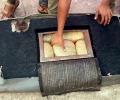
An extensive drug trafficking network operating throughout north India, with a particular focus on Shimla, has been busted following the arrest of two individuals - one from Kolkata and one from Delhi. The syndicate used online platforms for booking drugs, misusing innocent people's accounts and delivering drugs through couriers. Police have frozen 21 accounts associated with the network and arrested 16 individuals, including the kingpin, Sandeep Shah.

Haryana is strengthening its anti-narcotics framework with an integrated and technology-driven roadmap, focusing on increased enforcement, inter-state coordination, and financial disruption of drug networks.

The US Food and Drug Administration (USFDA) recorded a significant decline in serious regulatory findings at Indian drug manufacturing facilities between January and December 2025. Data reveals that 'official action indicated' (OAI) cases - the most severe classification - nearly halved over the past year.

'...would obesity still be a global epidemic?'

The imposition of a 100 per cent tariff by the US on imports of branded and patented pharmaceutical products starting October 1 may not significantly hurt Indian drug makers, with Sun Pharma being exposed to some headline risk but with limited earnings impact, according to analysts. Among Indian companies, only Sun Pharma has sizeable sales from patented drugs in the US (about 17 per cent of 2024-25 revenue), HSBC Global Investment Research said in a report.

Prices for Indian consumers are expected to come down significantly from the current Rs 17,000-Rs 26,000 monthly.

There are enough people at the top decision-making level in Tehran who are still willing to negotiate, provided Trump can create the right setting for the negotiation to acquire a dynamic of its own, points out Ambassador M K Bhadrakumar.

At the heart of this debate is Section 3(d) of the Patents Act, a safeguard designed to prevent drugmakers from extending monopoly protection through trivial modifications to existing medicines.

The World Health Organisation (WHO) has issued an alert against three "substandard" oral cough syrups identified in India and urged national regulatory authorities worldwide to immediately notify it if these are detected in their country.

Telangana's anti-narcotics wing, the EAGLE Force, conducted a multi-state operation against a Nigerian drug cartel, resulting in over 50 arrests and the seizure of narcotics worth Rs 3.5 crore.

Danish pharma major Novo Nordisk on Friday launched its blockbuster type 2 diabetes treatment injection Ozempic, globally popular for its weight-loss benefits.
At present, there is no provision under Drugs Rules, 1945 to address issues of wrong information to obtain regulatory approvals.

The artificial intelligence (AI) ecosystem is opaque and needs to be made transparent and accountable, said Competition Commission of India's (CCI) Chairperson Ravneet Kaur at the Business Standard Manthan Summit on Wednesday.
Indian Pharmaceutical Alliance (IPA) on Friday said US President Donald Trump's move to impose 100 per cent import tariffs on pharmaceutical drugs from October 1 will impact only patented and branded products, not generic medicines.

Delhi-based pharma major Mankind Pharma on Wednesday announced a collaboration with OpenAI to institutionalise artificial intelligence (AI) across its value chain, making it one of the first few Indian pharmaceutical companies to fully integrate advanced AI into its core operations.

Amid controversy over USPresident Donald Trump's comments linking the use of Tylenol and other related paracetamol products by pregnant women to autism in children, experts and industry executives say that since India's export of the drug to the US is less, it will hardly affect the country's pharma exports to America.
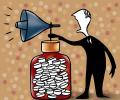
For decades, multinational pharmaceutical companies and Indian drugmakers worked in ways that supported each other: MNCs brought innovation and brands, while Indian companies built scale through generics and cost efficiency. There was an important overlap - generic drugs - but this is shrinking fast. And the consequences are reshaping India's gigantic pharmaceutical market.

I am inclined to believe that the Venezuela adventure is not an indication of American strength, alas, but rather of American weakness, points out Rajeev Srinivasan.
As the Drugs Controller General of India (DCGI) is set to crack down on companies to ensure compliance with printing QR codes on top-selling brands to curb counterfeiting, top pharma companies say they welcome the regulator's mandate and that they are on track. They also view it as a positive step to ensure patient safety. Sheetal Arora, CEO of Mankind Pharmaceuticals, which has already adopted QR codes in 20 of their products, stated: "We strongly advocate for mandatory implementation of barcodes and QR codes on medicines as this initiative will not only protect patients but also strengthen the integrity of our healthcare system by reducing circulation of counterfeit drugs."

Most first-time investors may be better served by diversified options such as flexicap or multi-cap funds, which already hold pharma and healthcare stocks.

Mumbai police have arrested Mohammed Salim Mohammed Suhail Shaikh, a key accused in a Rs 252-crore mephedrone seizure case, after his deportation from Dubai. Shaikh, known as 'Lavish,' is a member of an international drug syndicate and managed the supply and distribution chain from Dubai.

The Union Budget for 2026-27, presented by Finance Minister (FM) Nirmala Sitharaman on Sunday, which was a first, had an excellent domestic macro backdrop. According to the first advance estimates, gross domestic product (GDP) in constant prices is projected to grow 7.4 per cent in the current financial year, against 6.5 per cent in 2024-25.
Budget 2026 sticks to fiscal discipline, shuns populist measures despite five key state elections coming up, but ends up rattling stock markets with a higher transaction tax on derivatives trading.
If pharmaceutical exports from India to the US come under a 25 per cent tariff bracket, the impact on earnings before interest, tax, depreciation and amortisation (Ebitda) could be around 5 per cent, felt analysts. This is after assuming that about 75 per cent of the tariff would be passed on.

Concerns over weakening demand for Indian pharmaceutical (pharma) drugs in the US - their largest export market - have weighed heavily on investor sentiment this year. While the Nifty 50 has gained 6.02 per cent year - to - date (as on September 15), the Nifty Pharma index has declined 5.18 per cent, National Stock Exchange data shows.
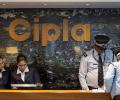
Drug major Cipla on Tuesday said it has launched drone-powered deliveries of critical medicines - cardiac, respiratory and other essential chronic therapies - to hospitals and pharmacies across Himachal Pradesh in partnership with Skype Air Mobility, a Gurugram-based drone delivery company. Cipla is the first among large Indian pharmaceutical companies to adopt drone-based deliveries to facilitate expedited supply to stockists in remote areas, it claimed. The Mumbai-based firm said the use of drones will support the on-time delivery of its medicines to chemists and clinics in remote areas, and minimise risks of affecting cold chain products due to temperature excursions.

Most of the pharma units are failing in documentation, and validation processes, and many don't have full-fledged quality control laboratories.
The industry feels two factors have played a role in improving the offtake and reducing trade inventory - one is that the supply chain in pharmaceuticals has more or less stabilised, and secondly, with lockdown curbs easing and OPDs opening, some demand has grown at the consumer end as well.
The Indian pharmaceutical industry is likely to benefit from a major wave of patent expiries in the US, as small-molecule drugs worth $63.7 billion are expected to go off-patent between 2025-29, a 65 per cent rise over the previous five years, according to a report by Antique stock broking limited.

Indian drugmakers supply 47 per cent of the generic medicine requirements in the US, and tariffs would have increased prices in the US domestic market for patients, who are already dealing with drug shortages.

India had the third-largest number of people living with HIV in the world at the end of 2013 and accounts for about four out of 10 people living with HIV in the Asian region.
India's pharmaceuticals and medical devices industries are still hopeful that trade negotiations with the US could cut a fairer deal for both sides, after President Donald Trump announced a 25 per cent tariff rate on India on a social networking platform without divulging the finer details.
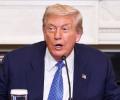
Donald Trump's tariffs, meant as political punishment, have avoided the predicted chaos, lifting US growth, weakening rivals, and letting him claim victory in a resilient global economy, observes T T Ram Mohan.

Drug shortages in the US are at an all-time high, and price erosion has stabilised, which could benefit Indian pharmaceutical (pharma) companies with a US focus, according to analysts. Nuvama Research analysts said that US price erosion seems to have normalised to its old levels of 6-8 per cent and volumes are picking up with easing of inventory. Similarly, an ICICIdirect analyst noted: "Price erosion intensity has now moderated to a single digit and is expected to tone down a
Merchandise exports to the US jumped 23.5 per cent year-on-year (Y-o-Y) to $8.3 billion in June, even as India's overall outbound shipments witnessed contraction during the month, according to the data released by the commerce department on Tuesday. The increase in outbound shipments to the US was largely driven by the rush among exporters to utilise America's pause on its plans to impose country-specific reciprocal tariffs.

An alleged synthetic narcotics producer, Kubbawala Mustafa, wanted on an Interpol Red Notice, was deported to India from the UAE in an operation coordinated by the CBI and Mumbai police.
